














Kerala stands apart in India—not just for its breathtaking natural beauty, but for its remarkable social progress and global footprint. With its lush landscapes, high literacy, and a population spread across continents, Kerala has long been admired as a model of human development.
Yet beneath this admiration lies a more complex reality. Kerala today represents a paradox: a society that has succeeded globally, but struggles to fully realize its potential locally.
Kerala’s economic strength did not emerge from large-scale industrialization or domestic production. Instead, it was shaped by migration.
From the 1960s onward, and especially during the Gulf boom of the 1970s, Keralites migrated in large numbers to the Middle East. Over time, this migration expanded to Europe, North America, Canada, and Australia.
The result was transformative. Remittances elevated living standards, strengthened education and healthcare, and created a consumption-driven economy that outperformed many Indian states.
But this success came with a structural limitation: Economic growth was fueled externally, not internally The Missed Opportunity of Structural Transformation The 1990s brought a new wave of opportunity through the rise of information technology. Kerala, with its educated workforce and global exposure, was well-positioned to capitalize on this shift.
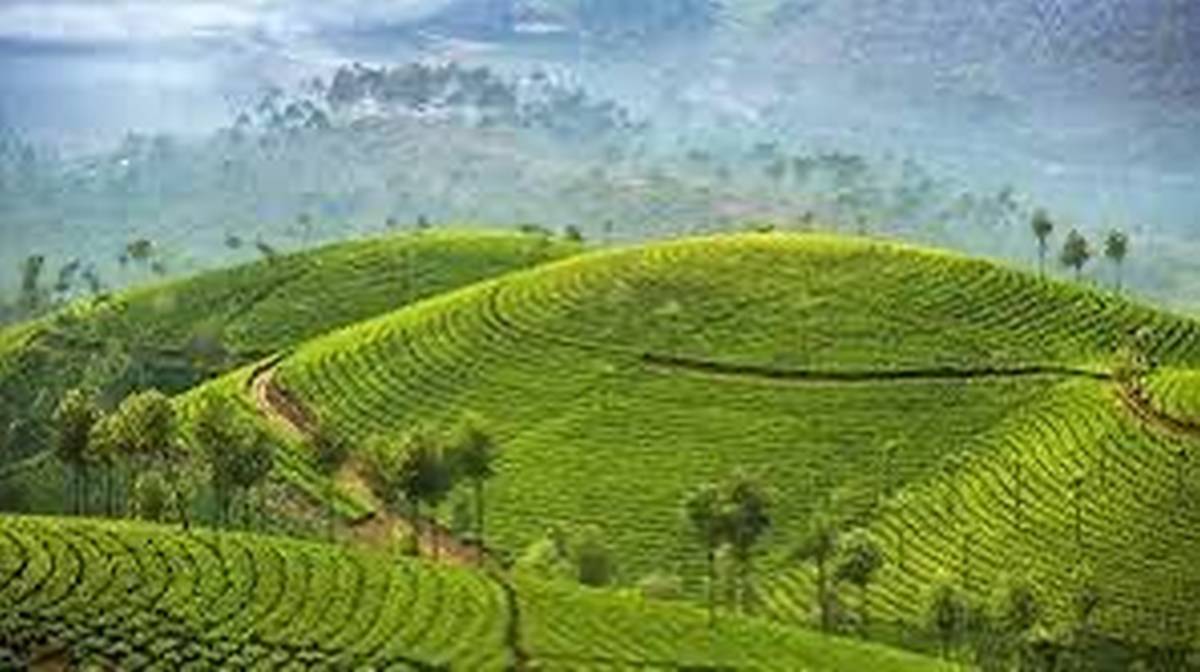
While progress was made, the state did not fully transition into a production-driven or innovation-led economy. Instead, reliance on remittances and public expenditure continued.
Kerala improved quality of life—but did not build a strong, self-sustaining economic engine.
Governance and the Cost of Delay
Across governments, a recurring challenge has been the gap between vision and execution.
Ambitious projects have often been slowed by:
Bureaucratic inefficiency
Political friction
Regulatory delays
The long journey of the Vizhinjam International Seaport illustrates this clearly. Conceived decades ago as a transformative infrastructure project, it took years of delay before nearing completion.
This is not an isolated issue—it reflects a broader pattern: Kerala plans well, but executes slowly.
Fiscal Pressure and Economic Imbalance
Kerala’s financial position has become a growing concern. Rising debt levels, heavy borrowing, and increasing fiscal strain have raised questions about sustainability.
The current administration under Pinarayi Vijayan is often described as decisive and administratively strong. However, critics argue that financial discipline has weakened, with excessive reliance on borrowing to sustain welfare and development programs.
A welfare-driven system without strong internal revenue generation risks long-term instability.
The Youth Exodus
One of the most telling indicators of Kerala’s structural weakness is the continued migration of its youth.
Despite high levels of education and skill, many young Keralites seek opportunities abroad. Migration to the Gulf continues, while movement to Western countries has accelerated.
This reflects a fundamental imbalance: Kerala produces talent, but cannot absorb it.
The result is a persistent cycle where aspiration is fulfilled outside the state, not within it.
Crime, Policing, and Public Confidence
Kerala is often considered safer than many Indian states, and its police force is relatively professional and responsive. However, a growing concern lies not only in crime itself, but in public perception of safety.
Issues increasingly discussed include:
The presence of local criminal gangs
Rising drug-related activity among youth Expanding cybercrime and social tensions Even if overall law and order remains stable, the visibility of such incidents has increased anxiety among the public.
For millions of Keralites living abroad, the dream of returning home remains strong. Financially secure and emotionally connected, many envision settling back in Kerala after years of work overseas.
Yet, hesitation persists.
A key concern is confidence in public safety and law enforcement consistency. While policing systems exist, expatriates—accustomed to stricter enforcement and predictability abroad—often perceive a gap.
Concerns include:
Localized intimidation or gang presence
Inconsistent enforcement of law
Delays in addressing complaints
Whether fully accurate or not, this perception has real consequences. It affects decisions on:
Permanent return
Investment in property or business
Long-term settlement
For a state that has benefited immensely from its diaspora, this is a critical challenge.
Kerala must not only be safe, but it must also be seen as safe.

Leadership: Strength and Criticism
Chief Minister Pinarayi Vijayan is widely recognized as a strong and decisive leader. His governance style has ensured administrative control and continuity.
At the same time, critics point to:
A perceived rigidity or authoritative approach Centralized decision-making Limited tolerance for dissent This creates a dual image—effective, yet sometimes distant—raising important questions about the balance between authority and inclusiveness.
A State at a Crossroads
Kerala today stands at a defining moment.
It possesses:
Unmatched natural beauty
A globally connected population
Strong social development indicators
A highly educated workforce
Yet it continues to face:
Economic dependence on remittances
Rising fiscal pressure
Limited job creation
Concerns about governance efficiency and public confidence Kerala’s challenge is not a lack of resources—but a lack of structural transformation.

From Potential to Performance
Kerala’s story is not one of failure. It is the story of a state that achieved extraordinary social progress, but has yet to fully translate that success into economic strength and institutional confidence.
Its greatest strength—its global diaspora—has sustained it for decades. But its future cannot depend solely on income earned elsewhere.
The path forward is clear:
Build a production-driven economy
Strengthen governance and execution
Ensure financial discipline
Restore public confidence in safety and institutions Create opportunities that allow its people to return—not just visit Until then, Kerala will remain what it has long been:
a model of social success, but an unfinished economic story.

Sibi David
New York
April 8, 2026