















It was shortly after my 60th birthday that I began feeling unexpectedly low. My family told me I was walking like an elderly man-even though I wasn’t nearly old enough to move or behave that way. I realized I had started thinking and acting like a senior citizen. My mental health felt heavy, my body sluggish, and my gait slow, as if I were a geriatric patient.
I kept wondering how I could make a meaningful change. My son, a physician, encouraged me to go to the gym or at least walk every day. But between my busy schedule as a psychotherapist and my own doubts, it never happened. Honestly, I wasn’t convinced that exercise alone would restore my physical or emotional well being.
Two years ago, my entire family-my wife, son, daughter, and our grandchildren-gathered at our home in Wayanad, India, where we had lived for over 30 years. We reminisced about our monthly hikes to Chembra Peak, our long walks through Wayanad wildlife sanctuary trails, and our adventures tracking signs of elephants and tigers with the forest department. Those were some of the happiest moments of our lives.
My daughter, a clinical social worker in Australia, said something that stayed with me:
“Dad, you had so much energy back then. You need to go back to that age-mentally.”
On my flight back to the United States, her words resurfaced. Why couldn’t I recreate the mindset, emotions, and behaviors I had in my 40s and 50s?. I didn’t have a clear plan, but the idea settled somewhere deep in my mind.
Around the same time, I was treating five geriatric patients ranging from late 60s to 80s—referred for depression and anxiety. They, too, felt trapped by age. Traditional therapy wasn't helping them make significant progress. Their minds were conditioned, and I couldn't break through that barrier.
Jane, a 79 year old client, said, “I don’t think I can ever regain my physical health or vitality again.” Another client, Mr. Smith, age 82, told me, “It would be wonderful if I could have today’s wisdom and the physical health of my 40s or 50s. I would enjoy the rest of my life so much more.”
Mathew, laughing non-stop, said, “I forget a lot. Sometimes I can’t even remember my wife’s name, but I give her a strong hug for quite a long time to make her happy. In that moment, I try to remember her name.”
Then it hit me, my daughter’s idea about returning mentally to age 45. It wasn’t the body that needed to change first. It was the mind. Could reenacting the mindset and behaviors of one’s 40s and 50s actually help?
My goal became clear: Motivate myself-and my patients-to mentally return to the happiest, and strongest period of their lives.
The first step was teaching them to talk to their bodies:
• When you say, “I’m too old for this,” your body listens.
• When you say, “Let’s try this,” your body listens too.
I asked each patient to recall their prime years-how they walked, talked, dressed, socialized, succeeded, and created joyful moments. Every day, they were to think only of that period.
Their daily positive affirmation was:
“I am listening to my body; it is good.
My mind is not foggy; it is energized and clear.
My thinking is sharp; I am able to face the challenges.
I am 45 years old.”
They weren’t rewinding their bodies. They were rewinding their identity.
This experiment continued for about six months. When we evaluated the results, the transformation was astonishing. It changed how we understood people, symptoms, treatment, and the entire therapeutic process.
• Negative emotions shifted to positive ones
• Physical strength and flexibility improved
• Memory and cognitive functioning increased
• Thinking became more concrete and focused
• They paid bills on time
• They operated computers better than before
• Daily functioning improved
Smith said, “Man, I’m driving to the bar again like I used to, enjoying time with friends. It feels amazing.”
Jane reported, “I’m answering phone calls without frustration, and I can drive myself to the grocery store.”
Michale, a double amputee, told me, “I reframed my thinking. I walk 300 feet daily with my prosthetics. I stopped behaving like an old cowboy.”
Mathew shared, “I’m no longer walking like my elderly mother. I can straighten my body just by changing my self talk. I even regained my memory by doing word searches like a teenager. I’m addicted to puzzles now-and my wife Leelan motivates me.”
They didn’t “fix” their bodies first. They changed how they related to themselves-and their bodies followed.
Nancy summarized it beautifully: “When I feel uncomfortable, I realize it’s not my health limiting me-it’s my self talk.”
This shift even motivated them to learn new skills, including AI tools like Copilot. Ms. Alice told me proudly, “My grandkids taught me how to use ChatGPT!”
A Paradigm Shift
This experience changed more than therapy, it reshaped my understanding of aging itself. Aging is not just a physical process. It is a mental, emotional, and behavioral experience shaped by how we see ourselves. The breakthrough was simple and liberating:
The way you speak to your body, the thoughts you choose, and the identity you embrace, shape how you age.
This insight invites a new possibility: When you change your internal conversation, your self talk, your beliefs, your mental age, you change the way you live.
Rewinding the mind isn’t about returning to the past. It’s about reclaiming the strongest, brightest, most unstoppable version of who you’ve ever been, and bringing that power into the present moment. When you transform the way you speak to your body and your mind, you transform the way you show up for your entire life.
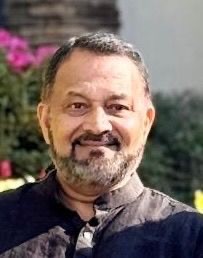
Lukose Jacob LCSW