














A recent Pew Research study reports that only 33% of U.S. adults attend religious services at least once a month—nearly a 40% drop in just 16 years. Forty-four percent say they don’t believe in the God described in the Bible, and most Millennials (born 1981–1996) don’t believe Jesus was divine. What’s behind this spiritual decline?
You've probably heard the old saying: “Don’t throw the baby out with the bathwater.” It means not to discard something precious because of the mess that surrounds it. Yet, when it comes to faith, that’s exactly what many—skeptics and believers alike—are doing.
The rational, well-founded core of the Christian faith (the precious “baby”) is often discarded because of hypocrisies of religion and its inconsistent, illogical teachings (the messy “bathwater”):
• Some stop attending church after hearing of sexual abuse, corruption, or infighting among church leaders.
• Others lose interest when preachers don’t practice what they preach.
• Some are disillusioned by weak or illogical defenses of faith in light of scientific understanding.
• Others recoil when churches use God’s name to advance political agendas that appear pro-rich, anti-environment, anti-science, or anti-equality.
• Still others are turned off by the myriad of Biblical interpretations.
• And many struggle to comprehend the supernatural—such as biblical accounts of miracles and the resurrection of Jesus.
Certainly, faith is surrounded by the murkiness of the church—the dirty “bathwater.” However, it is crucial to remember that the problem is not with the core beliefs—the “baby”— at all. To discern genuine faith, we need to examine two foundational areas: 1) Belief in God, and 2) The divinity of Jesus.
Belief in God
Belief in God hinges on Him being the all-powerful creator of the universe and of life itself — a belief supported by sound reasoning, divine revelations, and personal experiences. However, misconceptions about scientific theories and belief in God, have led many skeptics to challenge it.
The Big Bang theory
A scientific theory that has a significant negative impact on belief in God is the popular Big Bang theory, which proposes that the universe began about 14 billion years ago with the explosion of an extremely condensed bundle of energy. This theory has led many to mistakenly believe that the Big Bang, and science in general, invalidates faith in God. But this view suffers from crucial flaws:
There is no credible scientific theory that can explain how the energy that formed the universe came into existence. The formation of the universe from nothingness, in fact, points to the need for a supernatural creator who is beyond space and time.
Furthermore, no credible theory explains the universe's fine-tuning to the precise degree necessary for its existence and for life. At best, Big Bang describes a process that such a creator could have used.
The need for a supernatural creator is also evident in the origin of life on Earth. Despite all advances in science, a credible explanation for how life began on Earth remains elusive. An all-powerful creator explains both the beginning of the universe and of the infinitely complex life and its ability to adapt.
In addition, the Bible offers credible accounts of Jesus’s life, miracles, and resurrection, providing evidence that Jesus was divine.
Jesus Christ: Evidence That Isn’t Just Spiritual
Jesus Christ died 2000 years ago. Almost everything about his life – his deity, miracles, resurrection – is unnatural, and limited historical records exist outside the Bible. So, it is understandable that skeptics question the reliability of the Biblical account of Jesus.
However, there are verifiable facts and sound reasoning to answer such questions. Eminent Bible scholars have already established the credibility of the gospels through extensive research considering the context, culture, original language, and archaeological and historical evidence, using the same scientific methods that are commonly used to verify ancient documents.
The results of these investigations are available in various resources, including books like Strobel’s The Case for Christ and Joshua McDonnell’s Evidence that demands a verdict and Answers to Tough Questions Skeptics ask about the Christian Faith.
Here, we will look at two crucial questions concerning his divinity: 1) Did Jesus really do miracles? 2) Did Jesus resurrect? A segment of the scholars’ responses is summarized here:
The resurrection sparked a radical belief: If Jesus had not risen from the dead as He foretold, why would His followers have continued to hold such unwavering faith—willing even to face torture and execution? Despite countless critical studies, no one has been able to disprove the biblical accounts of the empty tomb or the post-resurrection appearances of Jesus.
You can’t fake resurrection stories in front of eyewitnesses: The Gospel writers could not have fabricated the miracles and the resurrection at a time when many eyewitnesses were still alive to challenge them.
Non-Christian sources provide significant evidence for Jesus: The Jewish historian Josephus refers to Jesus’ miracles and crucifixion, while Pliny the Younger, a Roman governor, records that Christians sang hymns to “Christ as to a god,” showing that they worshiped Jesus as divine.
Pre-Gospel evidence from Paul: The epistles written by the Apostle Paul, which predates the gospels, indicate that the early church consisting of many eyewitnesses believed in the resurrection of Jesus. In 1 Corinthians 15:3–8, Paul cites an early Christian creed that affirms Jesus’s resurrection and His appearances to many witnesses.
Archaeological support: Archaeological evidence continues to confirm the places, people, and events described in the Gospels—including the Pools of Bethesda and Siloam.
Prophecies vindicated: Many Old Testament passages foretold a Messiah, His suffering, and resurrection—vague? Maybe. But potent when combined with other evidence.
Thus, while some details remain uncertain, the overall evidence strongly supports the reliability of the Gospels.
Divine revelations and personal experiences
Divine revelations and personal spiritual experiences reported across cultures and throughout history also point to the reality of a supernatural God. Many accounts come from credible individuals whose lives were permanently changed in ways that defy natural explanation:
One of the most remarkable is the conversion of the Apostle Paul, who went from being a violent persecutor of Christians to one of Christianity’s greatest missionaries after a dramatic supernatural encounter with the risen Christ.
A similar transformation occurred in the life of Sadhu Sundar Singh of India. Fiercely opposed to Christianity in his youth, he became a devoted follower of Christ after a vivid appearance of the risen Jesus during a night of extreme desperation. He later described his experience as a certainty “beyond argument.” From that moment on, he traveled barefoot across India and Tibet, often recounting further divine guidance.
C. S. Lewis, one of the most influential Christian thinkers, offers another compelling example. Once a convinced atheist, Lewis experienced an overwhelming sense of God’s presence—that he could neither deny nor explain away—that reshaped his life forever.
And beyond these well-known figures are countless testimonies of miraculous healings and answered prayers—many medically documented and remain strikingly resistant to natural explanation.
These stories, taken together, form a powerful tapestry of human experience pointing toward a living, active God.
Some parting thoughts
Faith in God should not be shaken by the un-Christian behavior of leaders or by the flawed arguments of defenders of Christianity. Faith is not a blind leap. It rests on solid ground—logical reasons (cosmology, fine-tuning, the origin of life), historical evidence, and personal experiences. The core truths about God and Christ remain firm.
So, dear reader: Honest questions are healthy. Skepticism, when paired with openness, can strengthen rather than weaken faith. Just be careful not to throw out the baby with the bathwater. Hold on to the life-giving truths of the faith, while discarding only the mess created by religion.
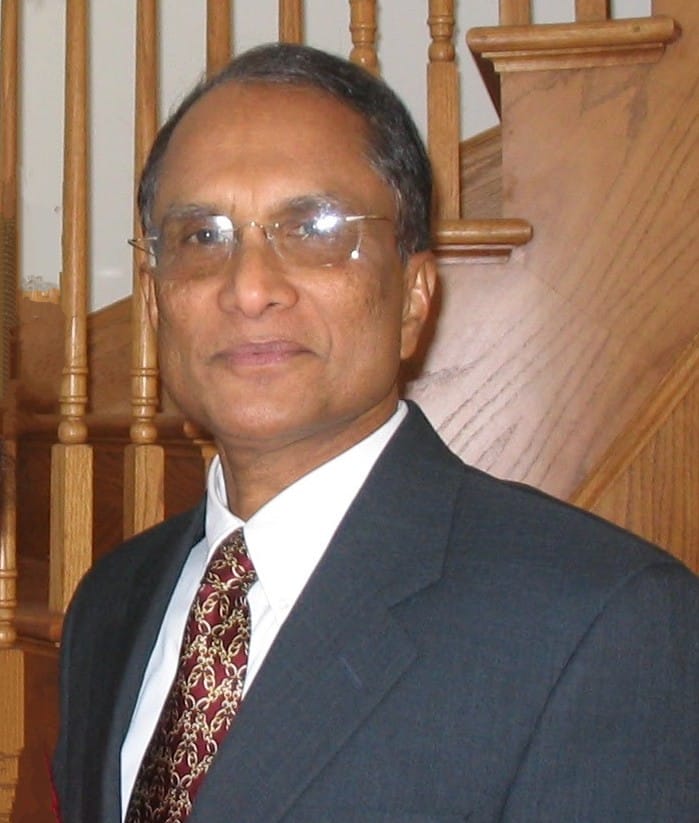
Prof. George C. Philip